
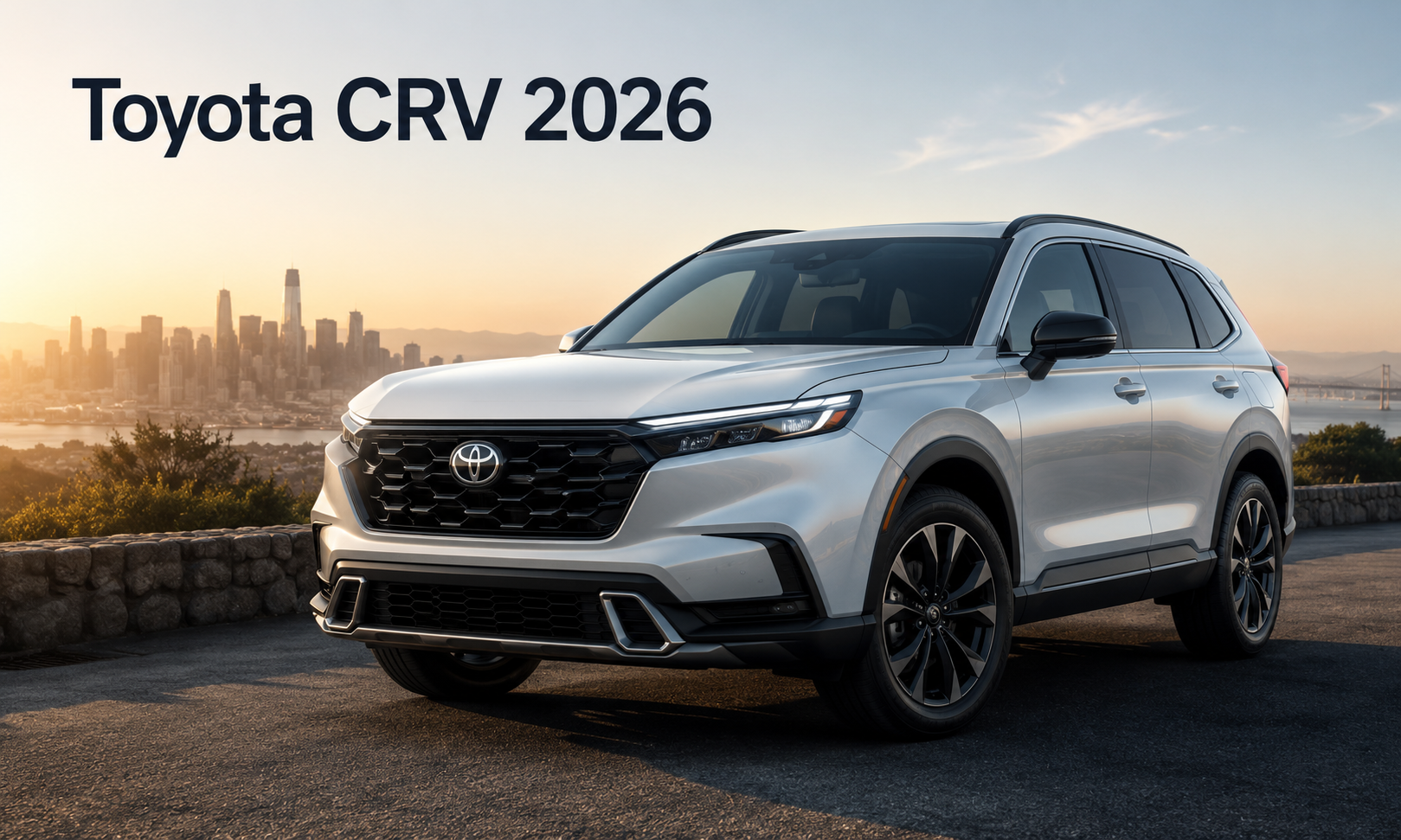

The correct model name, current US pricing, gas and hybrid choices, key updates, cargo space, fuel economy, and the best trim for most buyers
| 2026 CR-V QUICK FACTS | |
| Correct manufacturer | Honda. Toyota does not sell a CR-V. |
| Closest Toyota rival | 2026 Toyota RAV4 |
| Body style | Five-passenger compact crossover SUV |
| Gas engine | 190-hp turbocharged 1.5-liter four-cylinder with a CVT |
| Hybrid system | 204-hp two-motor hybrid |
| Starting MSRP | $30,920 before the $1,450 destination charge |
| Top trim MSRP | $42,550 before destination for Sport Touring Hybrid |
| EPA economy range | 29 to 40 mpg combined, depending on powertrain and drivetrain |
| Cargo volume | Up to 39.3 cu ft behind the second row and 76.5 cu ft with seats folded |
| Towing capacity | Up to 1,500 lb for gas models or 1,000 lb for hybrids |
| Best overall value | Sport Hybrid for efficiency and everyday performance |
| The important correction
There is no Toyota CR-V for 2026. CR-V is a Honda model. Toyota sells the competing RAV4. This guide answers the likely search intent by covering the 2026 Honda CR-V and explaining when the Toyota RAV4 may be the better alternative. |
People searching for toyota crv 2026 are usually combining the Toyota brand name with Honda’s CR-V model name. The correct vehicle is the 2026 Honda CR-V, a compact SUV positioned against the Toyota RAV4, Mazda CX-50, Volkswagen Tiguan, Hyundai Tucson, and other popular family crossovers.
The CR-V remains successful because it does almost everything well. It is easy to drive, roomy for five people, efficient, and practical without feeling oversized. The 2026 update does not completely redesign the SUV, but it improves the technology and adds a more adventurous TrailSport Hybrid trim.
2026 Honda CR-V Overview
The current Car and Driver review of the 2026 Honda CR-V places it first among compact SUVs and gives it a 10 out of 10 rating. The review highlights its agreeable ride, rear-seat space, useful cargo area, and updated cabin technology, while noting that the gas model is slower and less efficient than the hybrid.
That summary matches the CR-V’s main appeal. It is not the sportiest compact SUV, the most rugged off-roader, or the cheapest option. Instead, it delivers one of the most balanced combinations of comfort, space, efficiency, controls, visibility, and resale-friendly mainstream appeal.
What Is New for 2026?
- A 9.0-inch touchscreen is now standard across the lineup.
- Wireless Apple CarPlay, wireless Android Auto, and a wireless phone charger are standard.
- Selected upper trims receive a 10.2-inch digital instrument cluster.
- All-wheel-drive models gain improved low-speed traction-management programming.
- New wheel designs freshen the exterior.
- The TrailSport Hybrid joins the range with standard AWD, all-terrain tires, roof rails, and rugged styling.
The changes are useful rather than dramatic. Buyers moving from a 2023, 2024, or 2025 model will recognize the same basic cabin and body, but the larger standard screen and wireless connectivity make lower trims feel less dated.
2026 CR-V Prices and Trim Levels
Honda lists the complete trim range on its official 2026 CR-V model page. The advertised MSRPs exclude the $1,450 destination charge, taxes, registration, accessories, and any premium-paint charge. Dealer prices can also vary by region and inventory.
| Trim | Powertrain | Base MSRP | Price with destination |
| LX | 190-hp turbo gas | $30,920 | $32,370 |
| EX | 190-hp turbo gas | $33,150 | $34,600 |
| EX-L | 190-hp turbo gas | $35,400 | $36,850 |
| Sport Hybrid | 204-hp hybrid | $35,630 | $37,080 |
| Sport-L Hybrid | 204-hp hybrid | $38,725 | $40,175 |
| TrailSport Hybrid | 204-hp hybrid, AWD | $38,800 | $40,250 |
| Sport Touring Hybrid | 204-hp hybrid, AWD | $42,550 | $44,000 |
For most buyers, the Sport Hybrid is the strongest value. It costs only slightly more than the EX-L gas model before drivetrain differences, yet it adds the smoother and more efficient 204-hp hybrid system. The EX remains a sensible lower-cost choice for shoppers who want heated seats, a moonroof, blind-spot monitoring, and dual-zone climate control without paying for leather.
Gas or Hybrid: Which CR-V Should You Choose?
| Category | Gas CR-V | CR-V Hybrid | Better choice |
| Power | 190 hp | 204 hp | Hybrid |
| Transmission feel | CVT can sound strained under hard acceleration | Electric assistance feels smoother in city driving | Hybrid |
| Best EPA combined rating | 30 mpg FWD | 40 mpg FWD | Hybrid |
| Maximum cargo volume | 76.5 cu ft | 71.8 cu ft | Gas |
| Maximum towing | 1,500 lb | 1,000 lb | Gas |
| Lowest purchase price | LX starts lower | Sport Hybrid costs more | Gas |
| Best for heavy city use | Efficient but slower | Strong low-speed response and better city mileage | Hybrid |
The gas engine works for buyers who prioritize the lowest price, maximum cargo capacity, or the higher 1,500-pound tow rating. It produces 190 horsepower and uses a continuously variable automatic transmission. Performance is adequate, although hard acceleration can make the engine sound busy.
The hybrid is the better all-around powertrain for many households. Its 204 horsepower does not turn the CR-V into a performance SUV, but electric assistance makes starts and low-speed driving feel more responsive. It also delivers a large fuel-economy advantage in stop-and-go traffic.
Fuel Economy, AWD, and TrailSport
Front-wheel-drive gas trims are rated at 28 mpg city, 33 mpg highway, and 30 mpg combined. Gas AWD models are rated at 27 city, 31 highway, and 29 combined. The most efficient hybrid reaches 43 city, 36 highway, and 40 combined with front-wheel drive, while most hybrid AWD versions are rated at 40 city, 34 highway, and 37 combined.
The TrailSport Hybrid is rated at 38 city, 33 highway, and 35 combined because its all-terrain tires and standard AWD trade a little efficiency for traction and appearance. It is useful for snow, gravel roads, campgrounds, and light outdoor use, but it is not a substitute for a low-range 4×4 on difficult trails.
Interior Space, Cargo, and Everyday Comfort
The CR-V is especially strong as a family vehicle. Rear legroom is generous, the rear seatbacks recline, the doors open wide, and the cabin has a clean layout with physical climate controls. Visibility is good, and the driving position suits a broad range of body types.
Gas models provide up to 39.3 cubic feet behind the second row and 76.5 cubic feet with the rear seats folded. Hybrid trims provide 36.3 and 71.8 cubic feet because the powertrain packaging reduces underfloor space. The hybrid still has a useful cargo area, but buyers carrying bulky strollers, pet crates, or sports equipment should test the exact items before choosing a trim.
Technology, Safety, and Warranty
Every 2026 CR-V receives a 9.0-inch touchscreen, wireless smartphone integration, and a wireless charging pad. Upper trims add equipment such as leather seating, a power tailgate, parking sensors, a larger digital gauge display, Bose audio, Google built-in, and a hands-free tailgate.
Standard driver-assistance features include forward-collision warning, automatic emergency braking, lane-keeping assistance, lane-departure warning, adaptive cruise control, traffic-sign recognition, and a driver-attention monitor. These systems can reduce workload, but the driver remains responsible for steering, braking, and monitoring traffic.
Warranty coverage includes three years or 36,000 miles for the limited warranty and five years or 60,000 miles for the powertrain. Honda also includes one year or 12,000 miles of complimentary scheduled maintenance.
Honda CR-V or Toyota RAV4?
Choose the CR-V when rear-seat comfort, a calm ride, straightforward controls, and a large cargo area are top priorities. It feels polished and spacious, and the hybrid is particularly well suited to suburban and city driving.
Choose the Toyota RAV4 when you specifically want the Toyota brand, prefer its redesigned 2026 styling, or want to compare Toyota’s hybrid-focused powertrain strategy. The correct cross-shopping pair is Honda CR-V versus Toyota RAV4, not Toyota CR-V versus Honda RAV4.
| Best trim recommendations
Best budget choice: EX. Best overall value: Sport Hybrid. Best rugged-looking choice: TrailSport Hybrid. Best luxury and technology choice: Sport Touring Hybrid. Buyers in mild climates should consider front-wheel drive for lower cost and better fuel economy, while snow-belt buyers may prefer AWD with suitable winter tires. |
Frequently Asked Questions
Does Toyota make a CR-V?
No. The CR-V is made by Honda. Toyota’s comparable compact SUV is the RAV4.
How much is a 2026 Honda CR-V?
The LX starts at $30,920 before a $1,450 destination charge. The Sport Touring Hybrid starts at $42,550 before destination.
Is the 2026 CR-V hybrid worth it?
It is worth considering for drivers who travel many city miles or plan to keep the vehicle for several years. It offers better low-speed response and substantially higher city fuel economy.
Which CR-V trim is the best value?
The Sport Hybrid is the strongest all-around value for many buyers. The EX is the better lower-cost choice, while the Sport-L Hybrid adds leather and more convenience features.
Does the 2026 CR-V have three rows?
No. The US-market CR-V has two rows and seats five people.
Can a 2026 CR-V tow a trailer?
Gas models can tow up to 1,500 pounds when properly equipped. Hybrid models are rated for up to 1,000 pounds. Always confirm the exact vehicle, hitch, load, and accessory requirements.
Final Verdict
The search phrase toyota crv 2026 points to a naming mistake, but it also reflects a real buying decision between two leading compact SUVs. The correct 2026 Honda CR-V is a strong choice for buyers who want space, comfort, easy controls, and an efficient hybrid option, while the Toyota alternative is the 2026 RAV4.
Among CR-V trims, the Sport Hybrid offers the most convincing balance of price, power, and fuel economy. The EX remains a practical gas-only value, and the TrailSport Hybrid is the best fit for buyers who want standard AWD and more adventurous styling. Confirm final pricing on the window sticker because destination, paint, accessories, taxes, and dealer charges can move the total well above the advertised MSRP.